
5
min read
Clients often ask which language a website will use before discussing its features. A website usually combines several technologies: some define structure, others handle styling, interaction and data.
Understanding the difference helps you compare proposals and assess future support. You do not need to learn the syntax; connect the technology to your business needs.
HTML, CSS and JavaScript: different roles
HTML defines document structure: headings, paragraphs, links, forms and other elements. It is a markup language rather than a general-purpose programming language.
CSS defines presentation: sizes, colours, layout and rules for different screens. It should not be confused with languages typically used for server-side logic.
JavaScript is a programming language. In the browser, it can control interactions such as opening menus, validating fields, updating interfaces and requesting data from a server.
These roles complement one another. A form gets its fields from HTML, its layout from CSS and some behaviour from JavaScript. Simple form submission need not require complex client-side code.
What frontend and backend mean
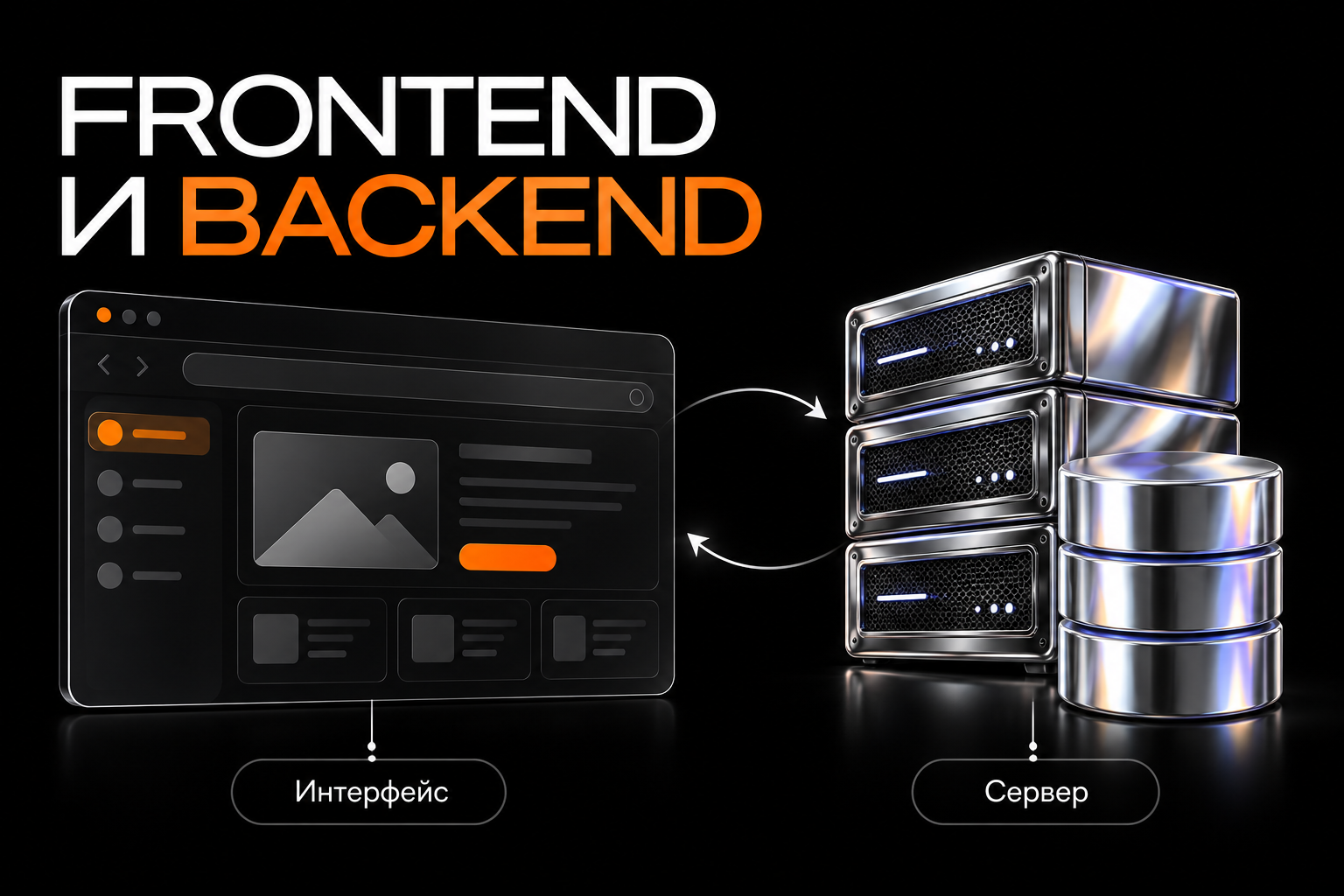
The frontend is the part users interact with: pages, buttons, controls and their behaviour in the browser.
The backend runs on the server. It may check access rights, process orders, query a database and enforce business rules. Not every website needs complex custom backend development; a ready-made platform may provide the necessary features.
An online store example
A shopper selects a product option and sees the interface change, then places an order. The server validates the submitted data and processes it as required.
Checking prices or access only in the browser may be insufficiently reliable. Important rules belong in a trusted system rather than depending on a hidden button.
Which languages run on servers?
Server-side development can use PHP, Python, JavaScript, Java, C# or Go, among others. Each can support different types of projects.
A language's name alone does not determine website quality. Architecture, developer experience, code quality and operational processes all matter.
Ask which tasks the chosen stack solves, who will support it and what its limitations are. A contractor should explain the choice beyond saying it is “the latest language”.
Where do databases fit?
Databases store information such as products, orders, users and content. SQL is used with many relational databases; it is not a replacement for a website interface.
Ask what data is stored, who can access it and how backups work. This matters more than a list of technologies in a proposal.
Website builder, CMS or custom development
A builder provides an environment for pages and some features. A CMS manages content and can be extended with modules. Custom development supports specialised journeys but requires an organised maintenance process.
Tilda suits many service websites, landing pages and other projects whose requirements fit its capabilities. It does not eliminate HTML, CSS or JavaScript; published pages still use them.
The owner can update content without writing code. That is a management advantage, not evidence that the site has “no technology”.
Choosing a solution for your business

- Describe user actions: reading, enquiries, purchases, sign-in or data processing.
- List integrations and constraints.
- Identify who will update content.
- Define access and backup requirements.
- Compare launch costs and future changes.
- Check whether another contractor can take over.
For a single service page, a simple editor and quick content preparation may matter most. For a service with several user roles, server-side logic and testing may be critical.
What to ask the developer
Ask them to name the technologies and explain their roles. Clarify which components are ready-made, which are custom-built and how dependencies are updated.
Establish who owns the accounts, where the code is stored and what handover includes. Access to a page is not enough if the site relies on a contractor's closed infrastructure.
Frequently asked questions
Can a website use only HTML?
A static page can work without custom server logic. Styling usually needs CSS, while additional interactions may need other technologies or services.
Are JavaScript and Java the same?
No. They are different languages. Similar names do not make them interchangeable or give them the same capabilities.
Should I choose the most popular stack?
Popularity can make hiring easier, but it does not replace suitability. Assess support availability for your particular project.
Getting started
Prepare requirements and user journeys first. Then choose technologies that explain how the website will work and how the business can develop it after launch.